Hyperion Surgical
Hyperion IVY
UX/UI design · Medical Device · Human Factors · Interaction Design
01 / Executive Summary
I spearheaded the end-to-end interface redesign for Hyperion Surgical's AI-assisted robotic IV-access system named Hyperion IVY, expanding the brief from a basic UI facelift to a system-wide workflow optimization that restored true single-user control.
02 / Challenge
Built without UX
The software had been built without dedicated UX design, and formative usability testing showed nurses becoming confused or forgetting what to do next. I had four months before the design freeze to rethink the experience.
03 / Process
Identifying project priorities
I partnered with the founders to map out our highest priority issues by:
- Walking through the end to end medical procedure.
- Analyzing pain points in usability testing videos.
- Synthesizing insights from the human factors report.
04 / Design the Solution
Problem: Memory fatigue
Usability testing showed nurses becoming confused or forgetting what to do next. Nurses would be trained once, then expected to remember the procedure later. For an unfamiliar, multi-step medical procedure, that was asking too much of memory.
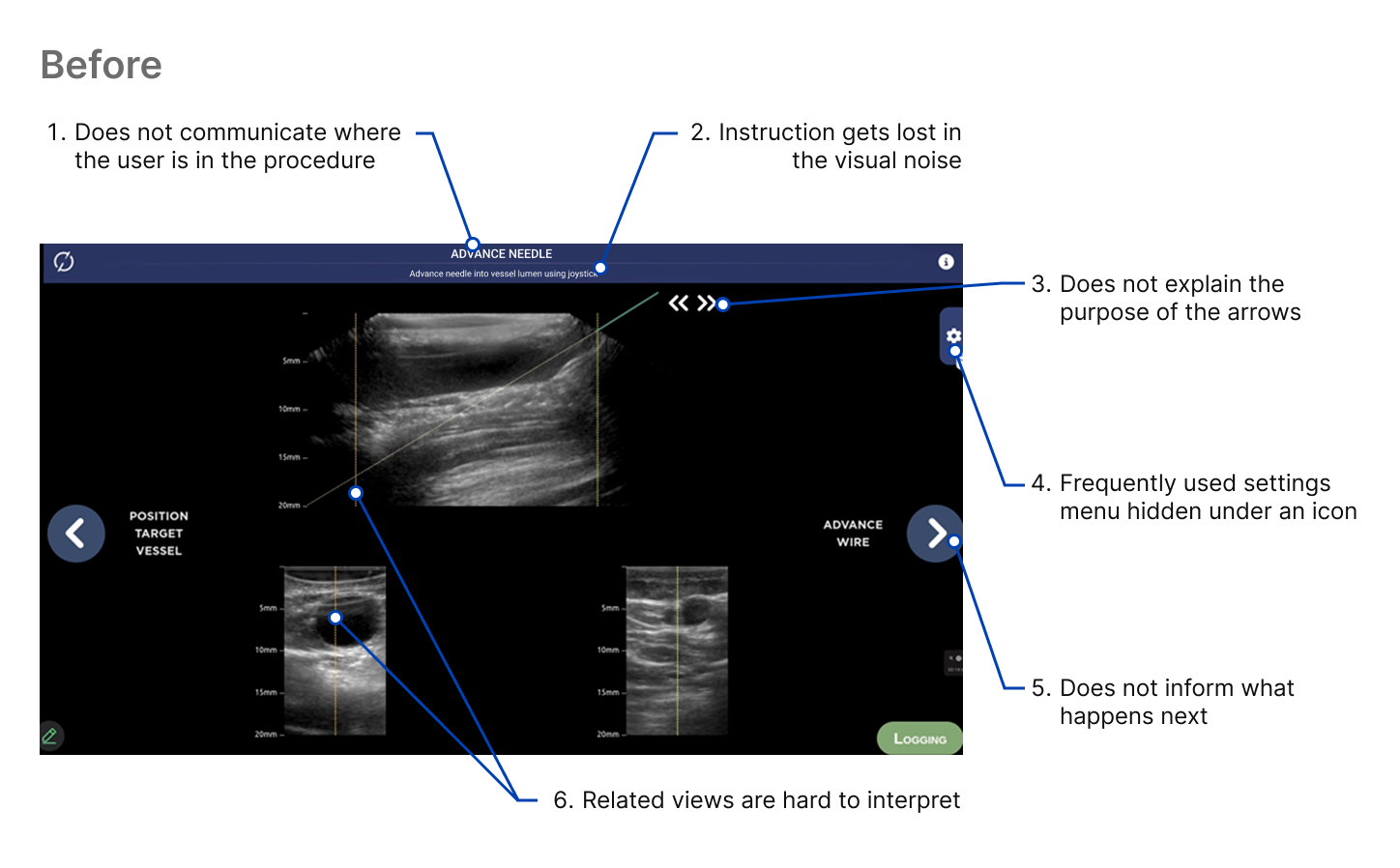
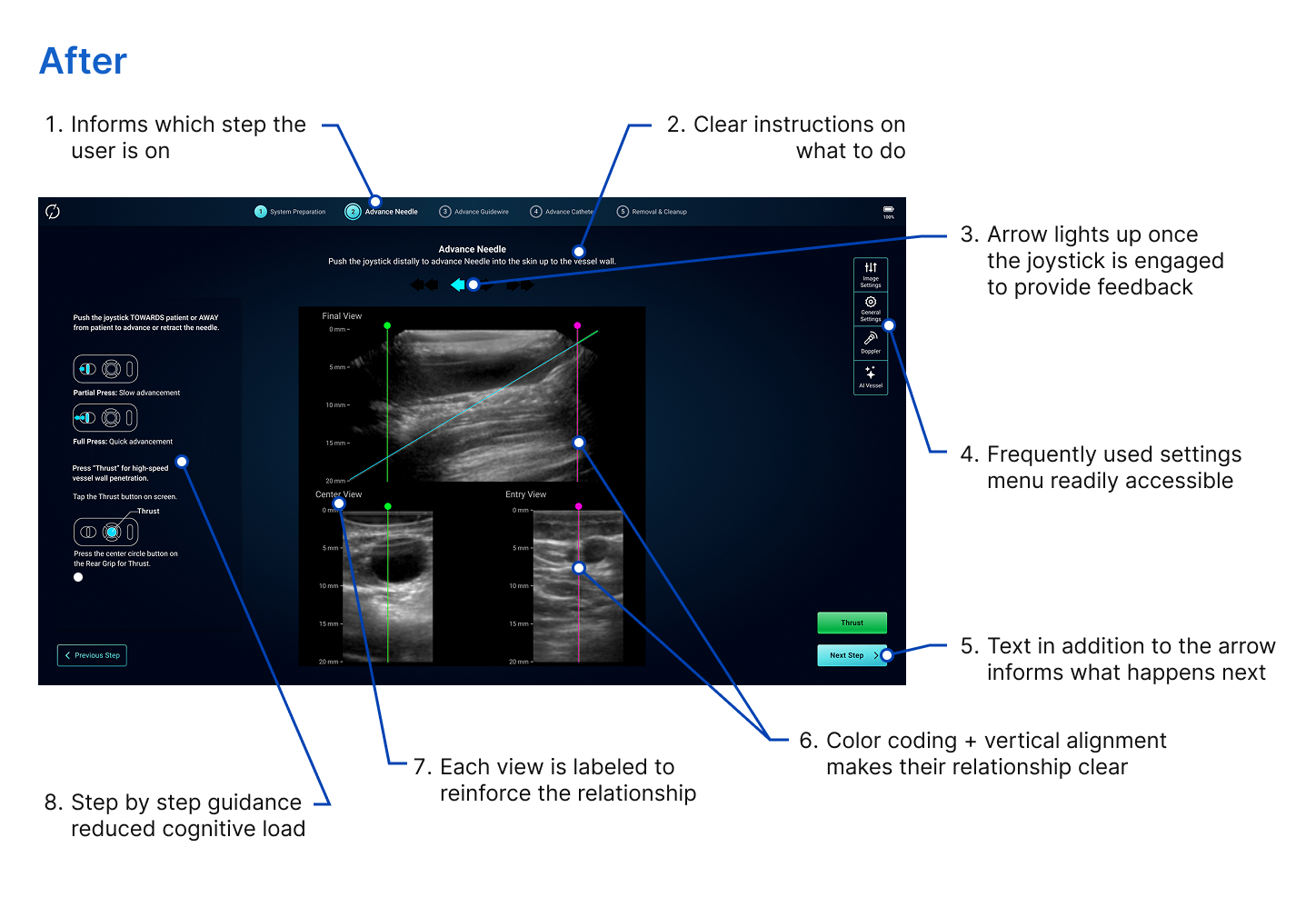
Solution: The interface guides the procedure
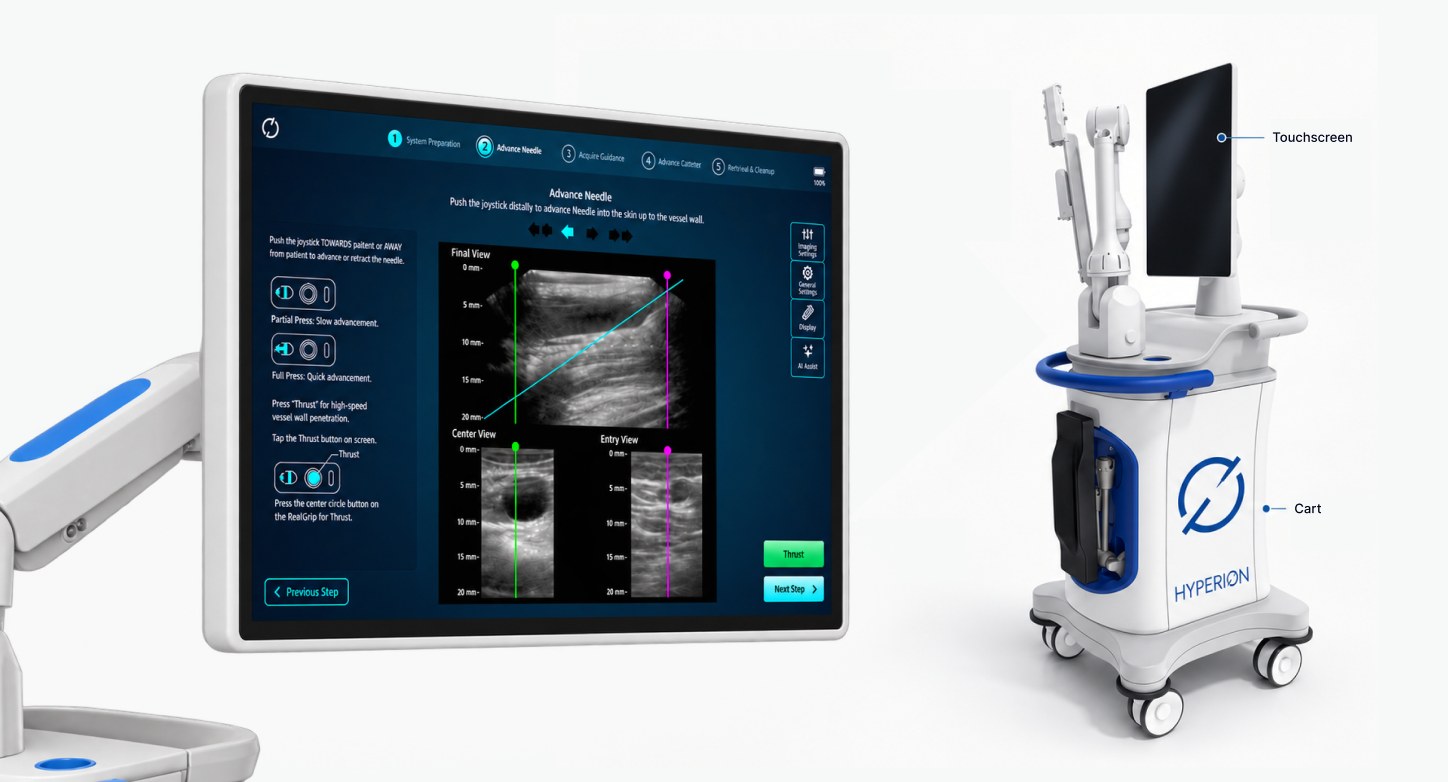
I translated human-factors insights into a structured UI layout, transforming a complex medical screen into an intuitive, step-by-step workflow that guides nurses safely through the procedure.
05 / Beyond the screen
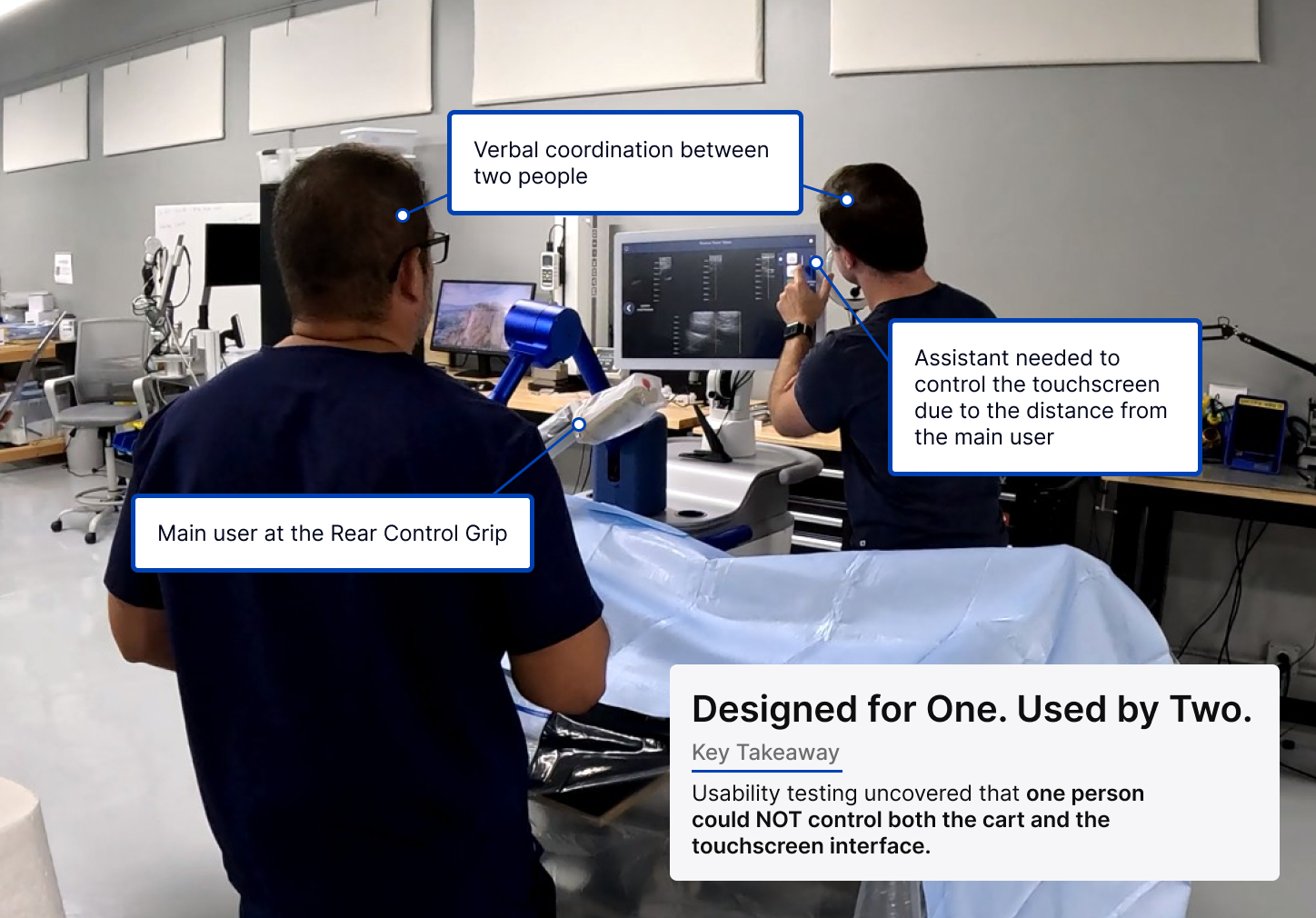
Problem Beyond the Screen!
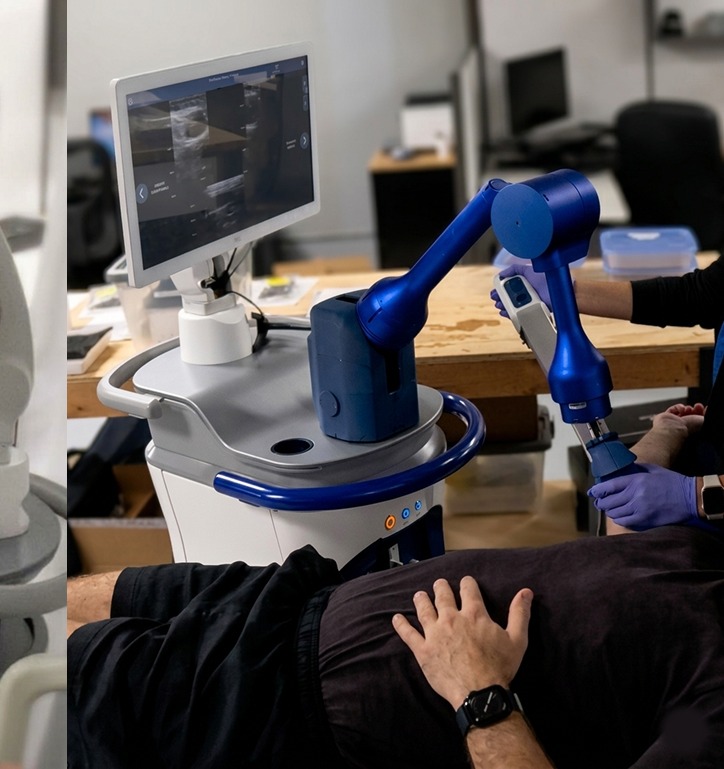
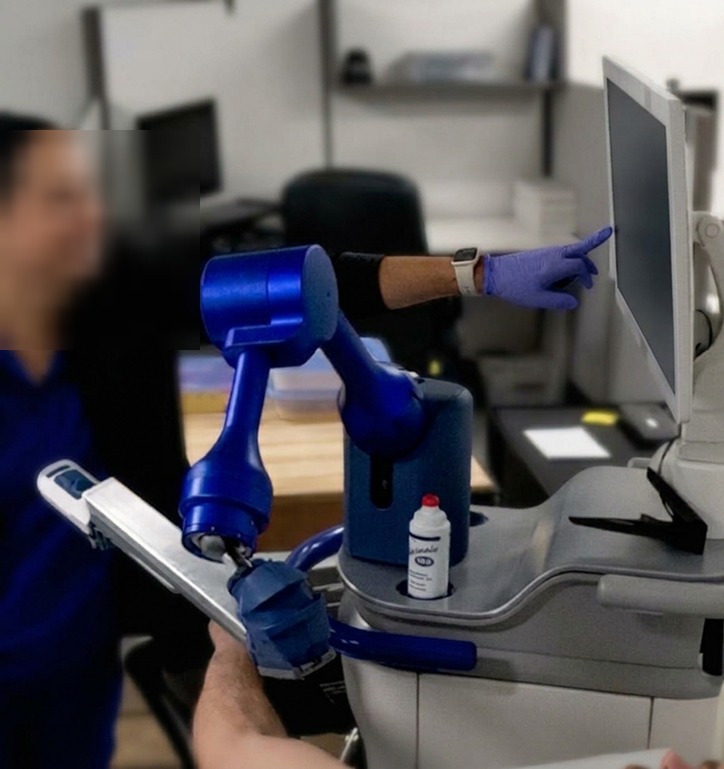
During a femoral procedure usability testing, I saw two people operating the system intended for single user. While the main operator managed the Rear Control Grip, a second person had to stand at the touchscreen to make selections because the screen was out of reach. While the co-founders initially accepted this as a normal operational reality, I highlighted it as a critical adoption and business risk.
Innovation within constraints
The Constraint: The Rear Control Grip was locked into forward/backward movement, preventing free interface navigation, and a looming December deadline ruled out any major hardware redesigns.
The Solution: I looked at familiar interaction patterns that people already knew and proposed a minor hardware change of integrating a simple 5-way navigation layout based on standard TV remote control designs.
The Outcome: Nurses can now navigate the software directly from the grip without breaking sterile field, touching the screen, or relying on a second person.
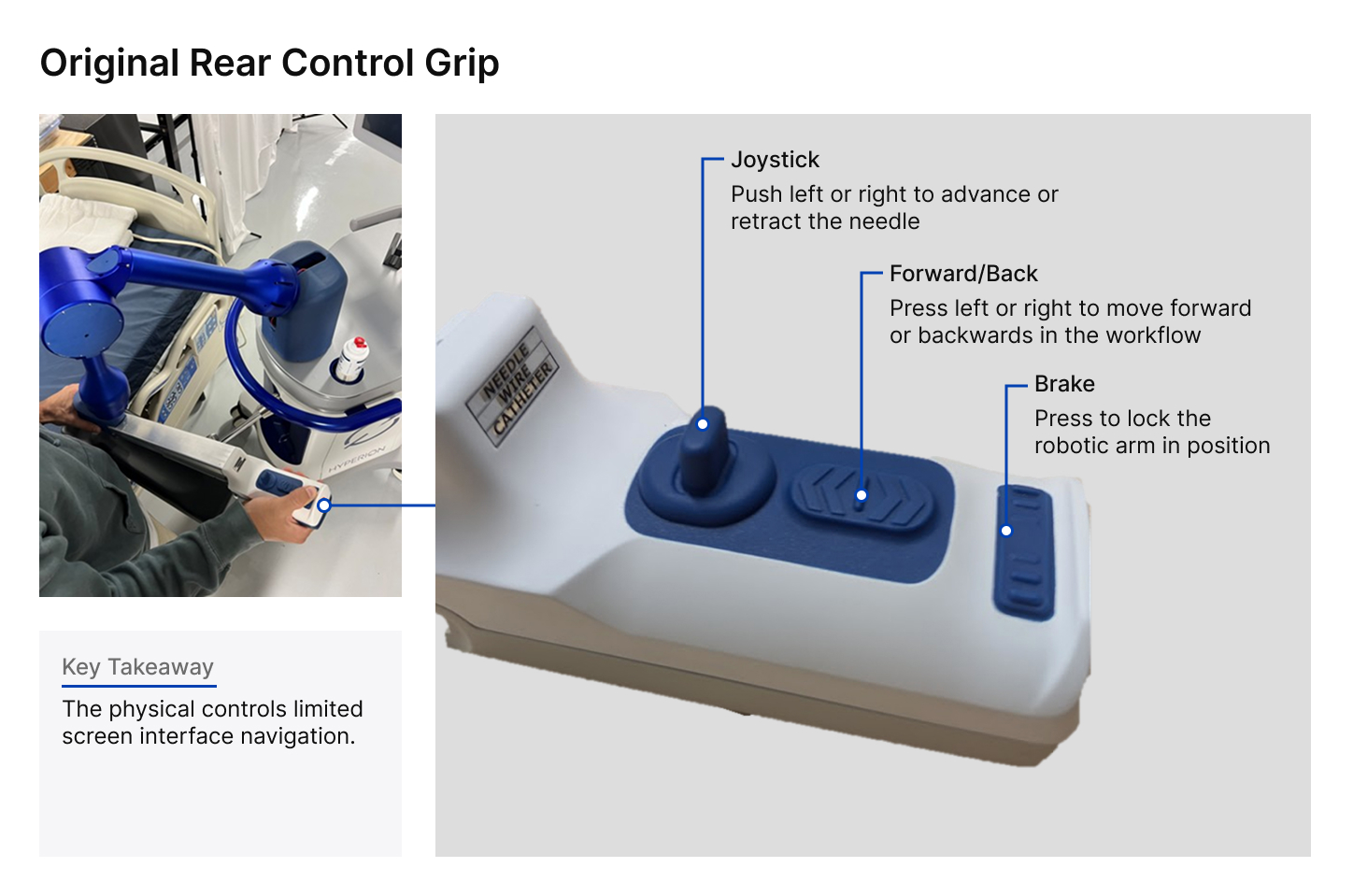
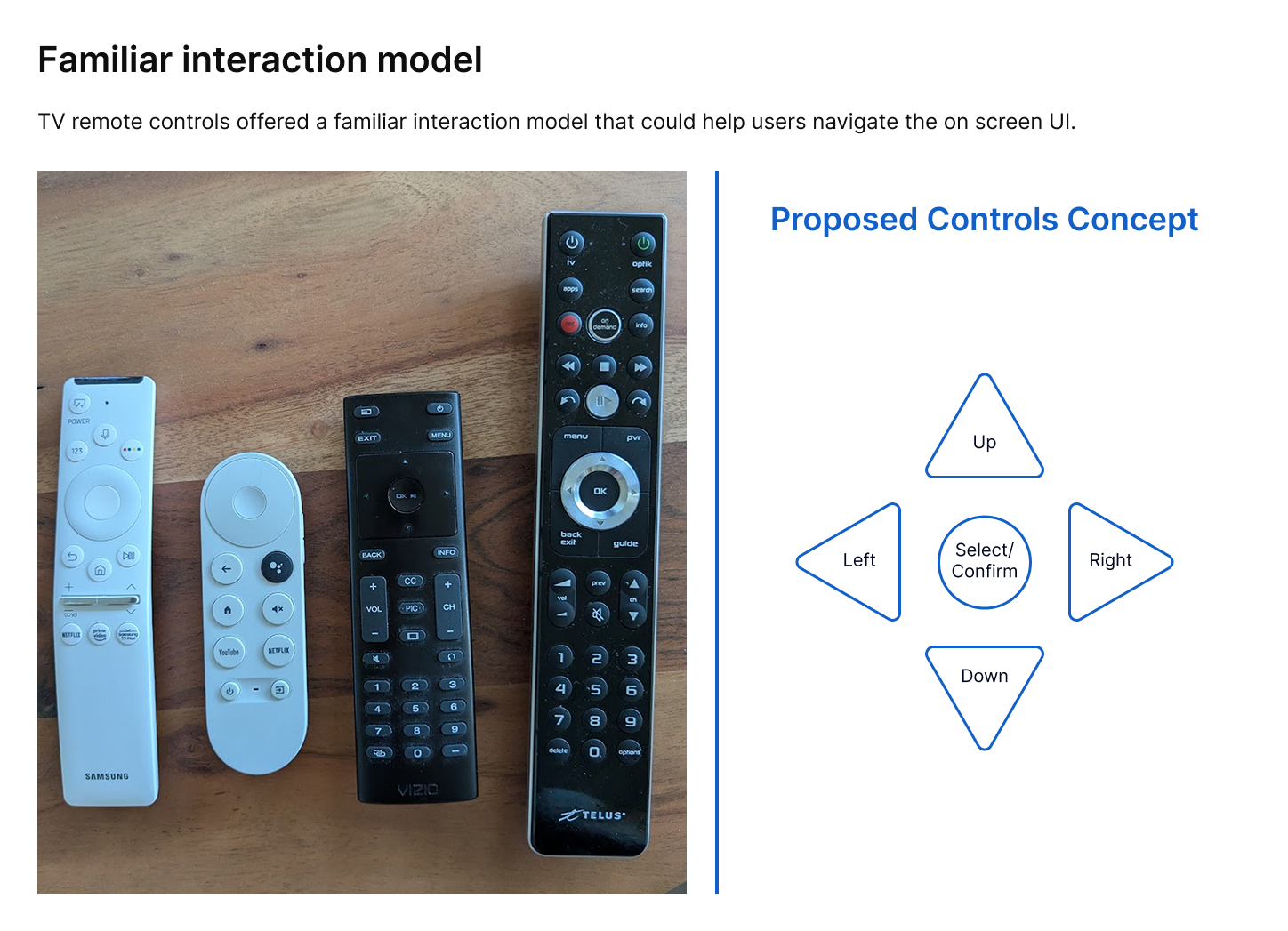
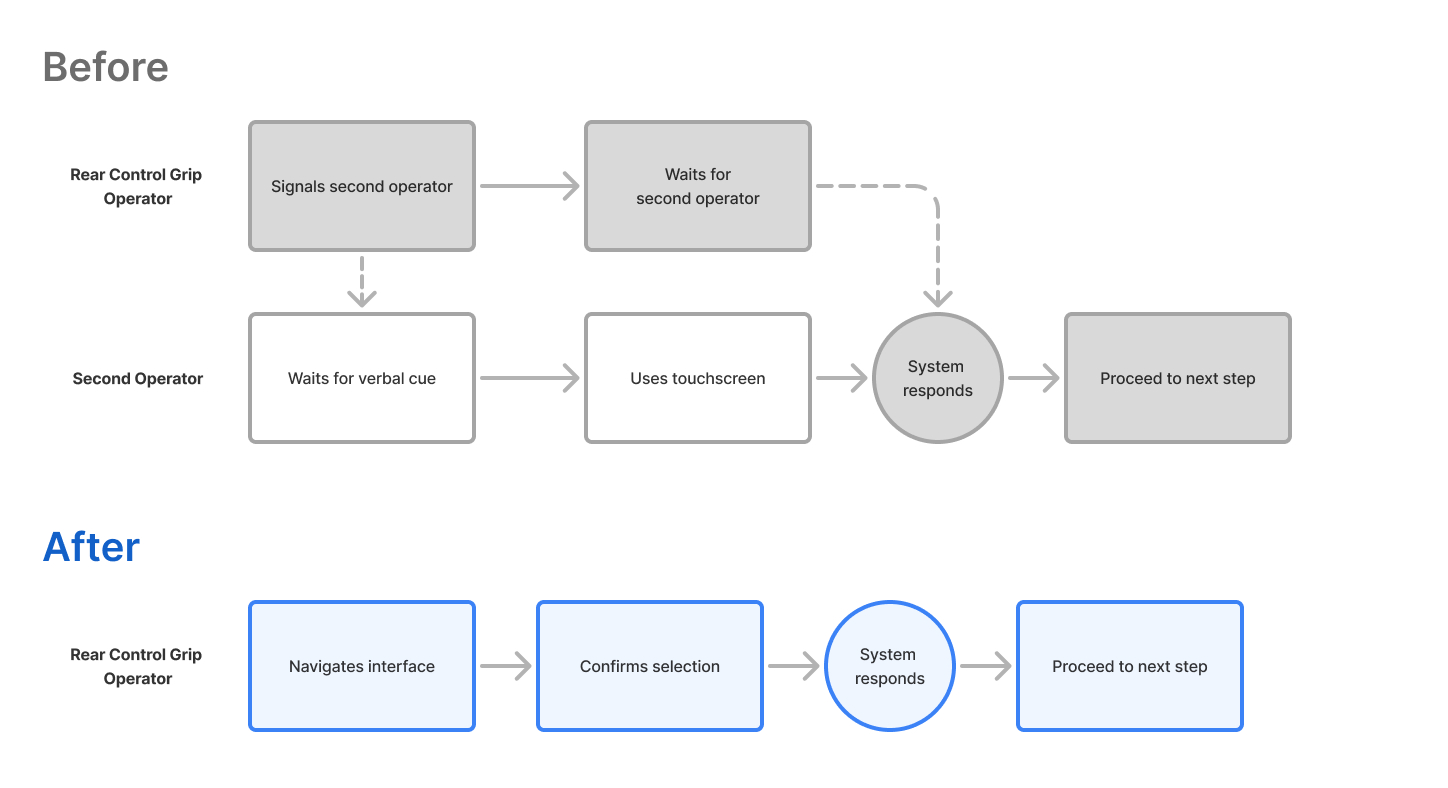
Proposing a minor hardware modification to achieve major workflow efficiency.
06 / Collaboration
Cross-Functional Collaboration
With the founders’ full backing, I brought the five-way navigation concept to the industrial designer and mechanical engineering team to discuss its technical feasibility.
The Outcome: Engineering confirmed that the hardware modification was feasible before the December deadline. The team immediately greenlit the proposal, moving into design modifications and physical prototyping.
07 / Outcome
Designing the System, Not Just the Screen
The client asked for a UI redesign. The true opportunity was fixing the system around it. The original platform successfully solved difficult IV access, but the complex software and multi-person workflow made the device intimidating, creating a high adoption barrier for nurses.
By shifting the cognitive load from the nurse’s memory to the product itself, I looked beyond the screen to deliver an implementation-ready system in just four months.
Impact & wins
What happened after
My engagement ended before clinical validation of this redesign. Hyperion Surgical initiated conducting in-human study using the IVY platform.